project spotlight: the westman hotel, bend or

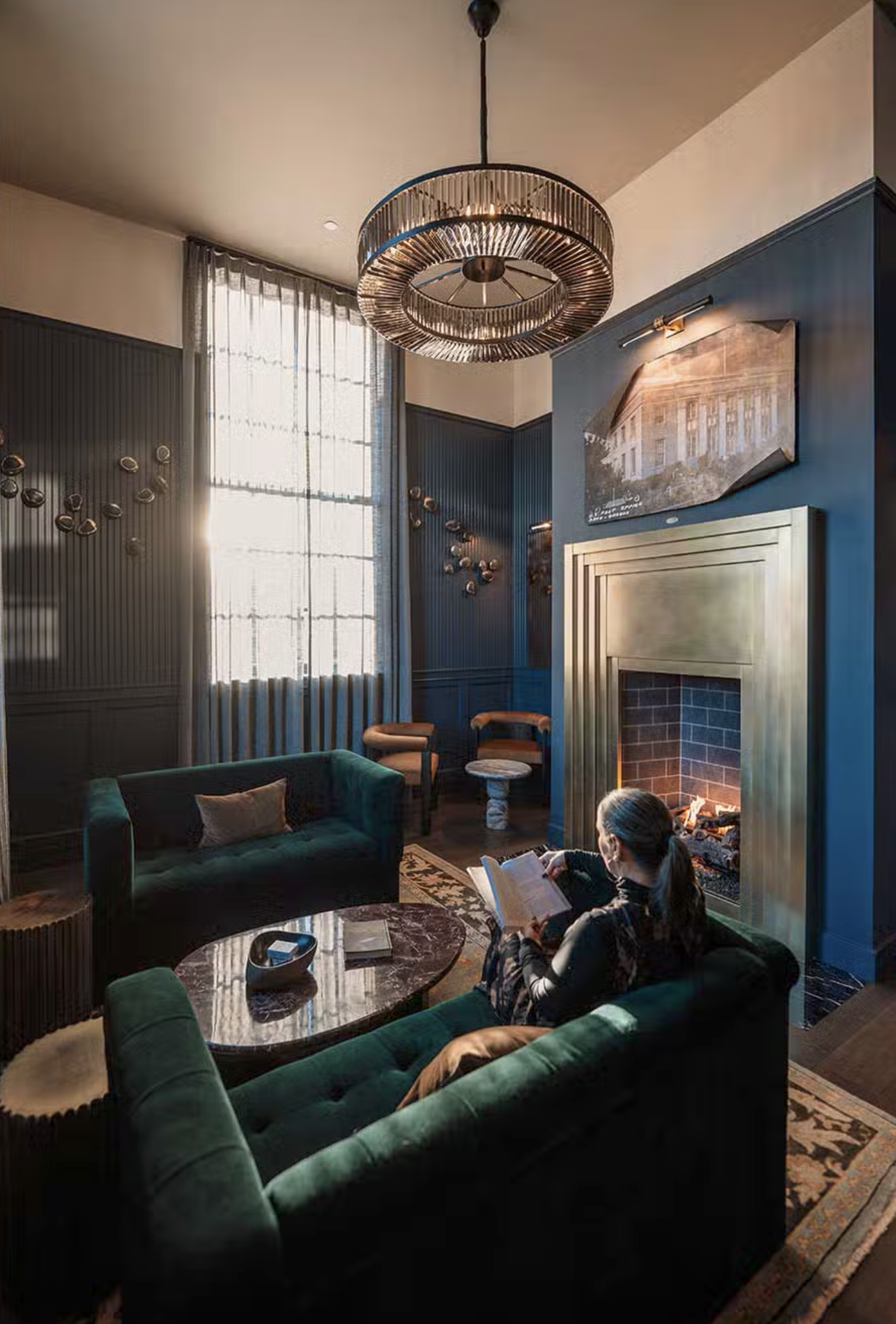
Set in the heart of downtown Bend, the newly restored The Westman tells a story rooted in connection, courage, and the enduring legacy of the American West. Inspired by the remarkable story of Minnie Westman—who rode horseback through Oregon’s rugged mountains delivering mail in the late 1800s, the art collection created by Local Language draws on themes of journey, communication, and the rugged beauty of the high desert.
In this interview, two of the art fabricators behind the collection share the process and inspiration behind their works; including a shimmering gold stone installation and a sculptural piece crafted from leather, inspired by the form and history of a vintage postman’s bag.
A conversation with Zee Weinstock, Senior Fabricator on The Stepping Stones and Meghan Faulkner, Chief Creative at Local Language.
Meghan: I’m here with Zee to talk about the Westman Hotel in Bend, Oregon, and a very memorable rock sculpture installation.
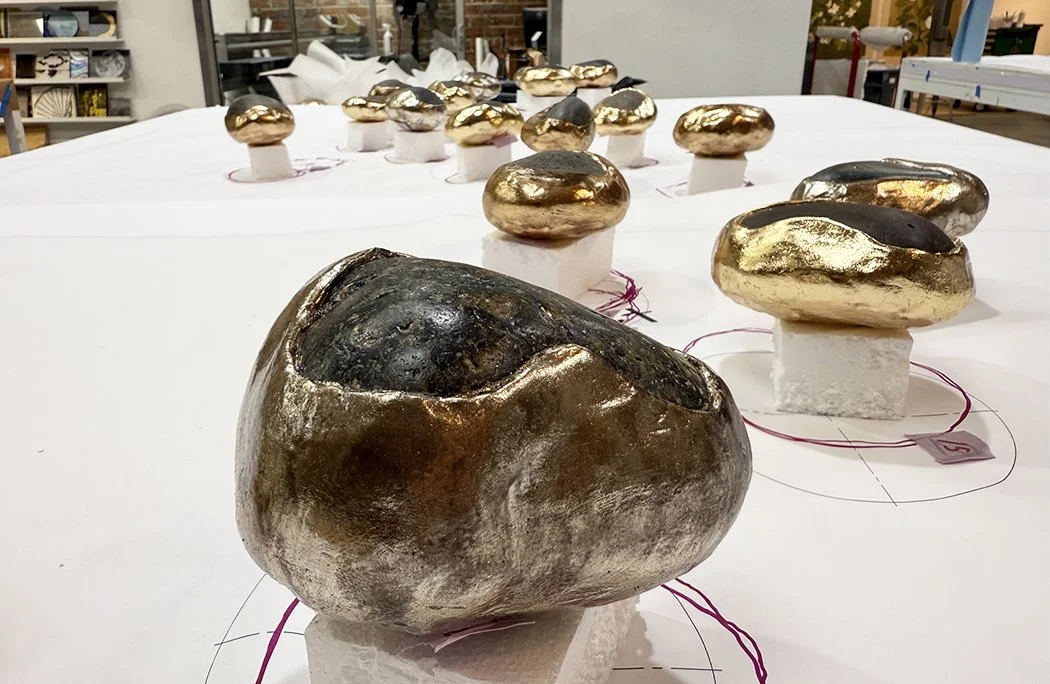
Zee: Hi, I’m Zee. I’m a Senior Fabricator at Local Language. The piece was called Stepping Stones, inspired by the natural surroundings of Bend.
Meghan: And are those actual rocks?
Zee: Yes, they’re real rocks.
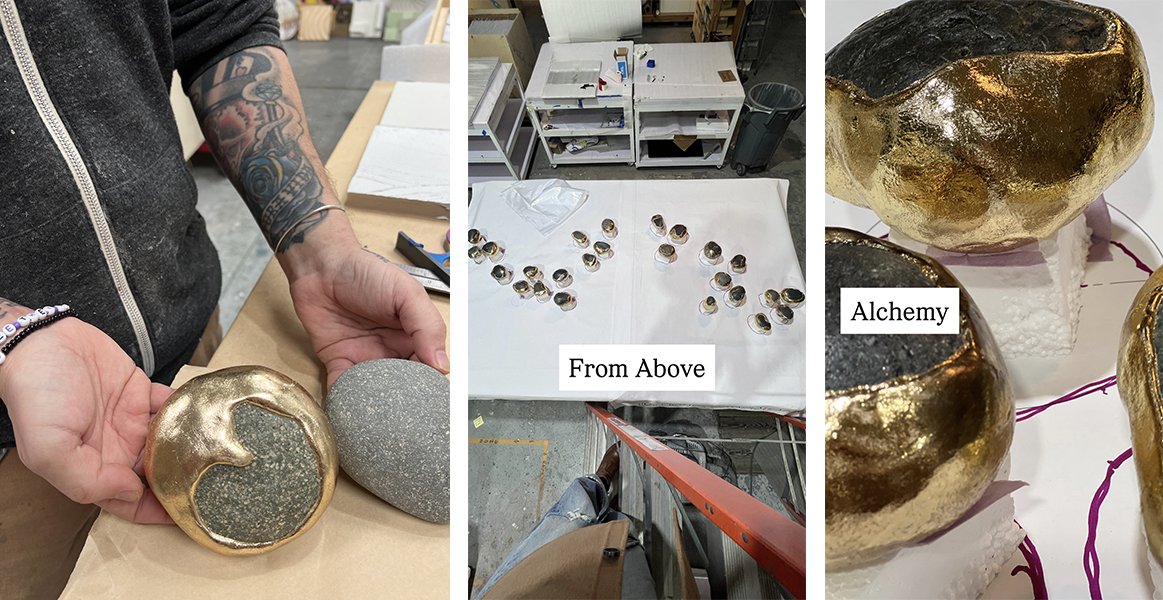
The goal was to create smooth river stones with a mineral quality, and then give the illusion that they’d been dipped in gold—almost like they were lowered into a fondue pot of gold and pulled back out, with the gold dripping over the surface. We wanted them to feel organic and natural, but also surreal and elevated.
Meghan: Fondue! We need to make more artwork with this inspiration… What was the most challenging part of bringing the artwork to life?
Zee: The biggest challenge was in the conceptual and prototyping phase, figuring out the right materials and order of operations. We used a two-part foam resin as a sculpting material. That’s what creates the gold “drip” form around the rock.
Meghan: So that sculpted form underneath the gold, that’s not part of the original rock?
Zee: Exactly. We would mount the hardware into the back of the rock first, then build and sculpt the resin around it to create that dripping effect. So we had to determine the correct sequence - hardware first, then sculpting - because these were going to be mounted on a wall. We were working against gravity the whole time.
Meghan: Right, so they not only had to look good, they had to stay on the wall.
Zee: Exactly. Since they’re real rocks, each weighing anywhere from two to four pounds depending on size—we had to prototype them directly on the wall to ensure proper adhesion and stability. That’s always a consideration in our projects, but especially with something weight-bearing like this.
Meghan: What’s your favorite detail of the piece?
Zee: I love the reveal. You can still see and feel the original rock, it’s clearly a natural stone, but it has this surreal transformation where part of it looks like it’s been turned into molten gold. There’s something magical about that contrast. Where have you ever seen a gold-dipped rock?
Meghan: Besides in a fondue pot of gold? Nowhere… Looking back, would you change or remix anything?
Zee: Honestly, no. It came out beautifully, and the client was extremely happy. There was one funny moment during the prototype phase, though. I was sculpting the gold drip in a very organic way, just letting it naturally flow. The client looked at it and said, “Wait! Looks a bit like a heart?” I didn’t even realize it - but we changed it!
Meghan: So - accidental romance in the prototype stage. Okay, last question: Did you listen to anything while fabricating?
Zee: I usually listen to podcasts while I work. During this project, I was listening to a Dungeons & Dragons podcast. So in my head, these rocks were like magical artifacts, something pulled from a dragon’s hoard. A gold-infused relic with a little bit of fantasy energy.
Meghan: River stone meets fantasy treasure…
A conversation with Chelsea Marin, Senior Fabricator and Meghan Faulkner, Chief Creative at Local Language
Chelsea: Hi - I’m Chelsea Maron, and I’m a senior fabricator at Local Language. Basically, I get to help turn wild ideas into real, physical artworks.
Meghan: Tell us about the inspiration behind this artwork, Minnie Westman, the first woman mail carrier west of the Mississippi.
Chelsea: I really went down a rabbit hole researching vintage postal service bags for this artwork. Minnie was definitely an inspiration.
Meghan: Let’s talk materials. What went into this piece?
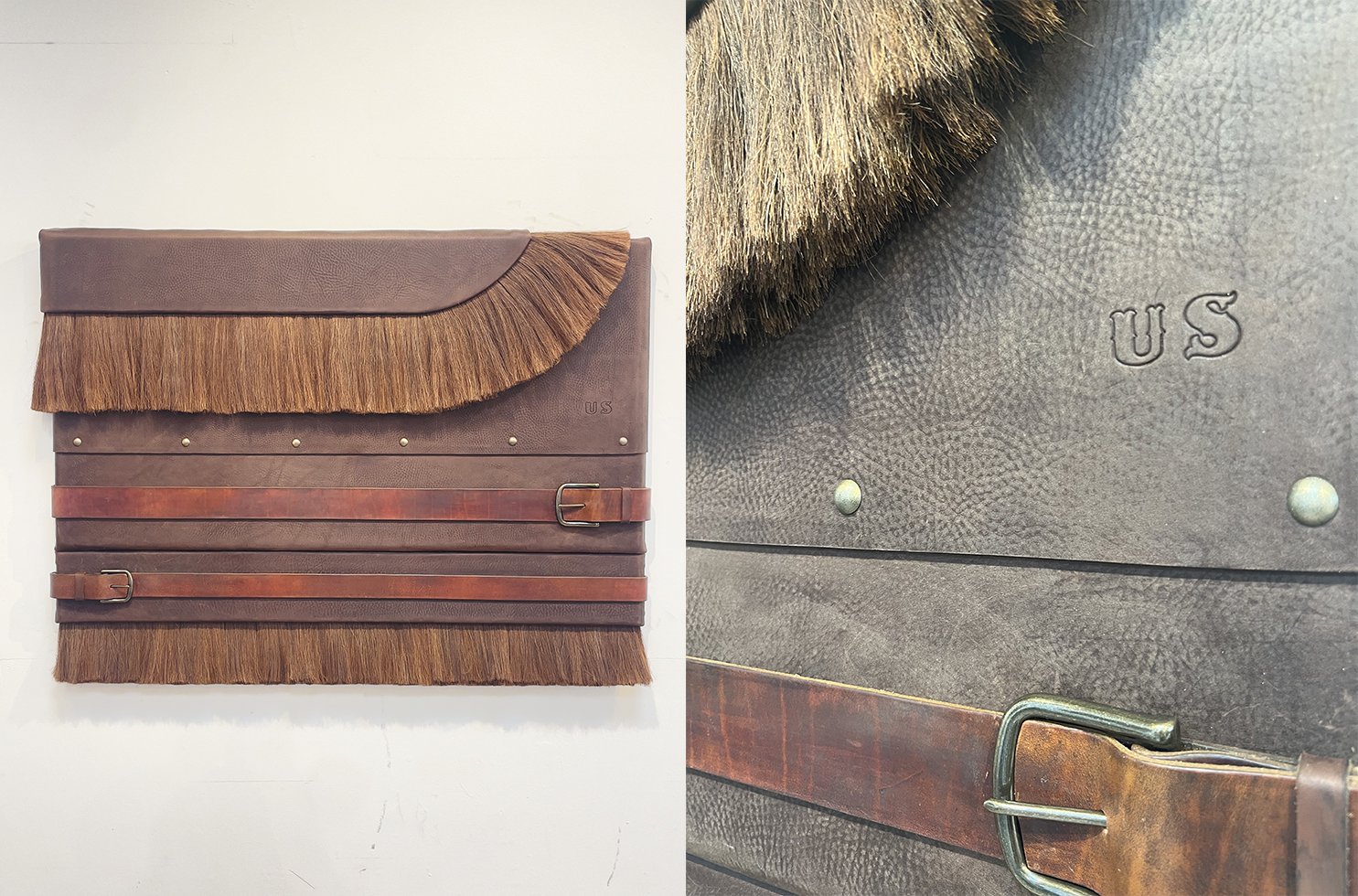
Chelsea: Leather, horsehair, brass buckles, belting, and rivets. We ordered raw leather from a leathercraft supplier, and it came in this peachy, unfinished color. So we hand-dyed everything ourselves. It was very hands-on.
Meghan: So this wasn’t just assembling, it was a full-on transformation.
Chelsea: Exactly. We had to think about everything, down to how the leather folds and turns. There’s no real stitching in the piece, so we had to problem-solve seam allowances and layering to account for the thickness of the leather.
Meghan: And then there’s the horsehair.
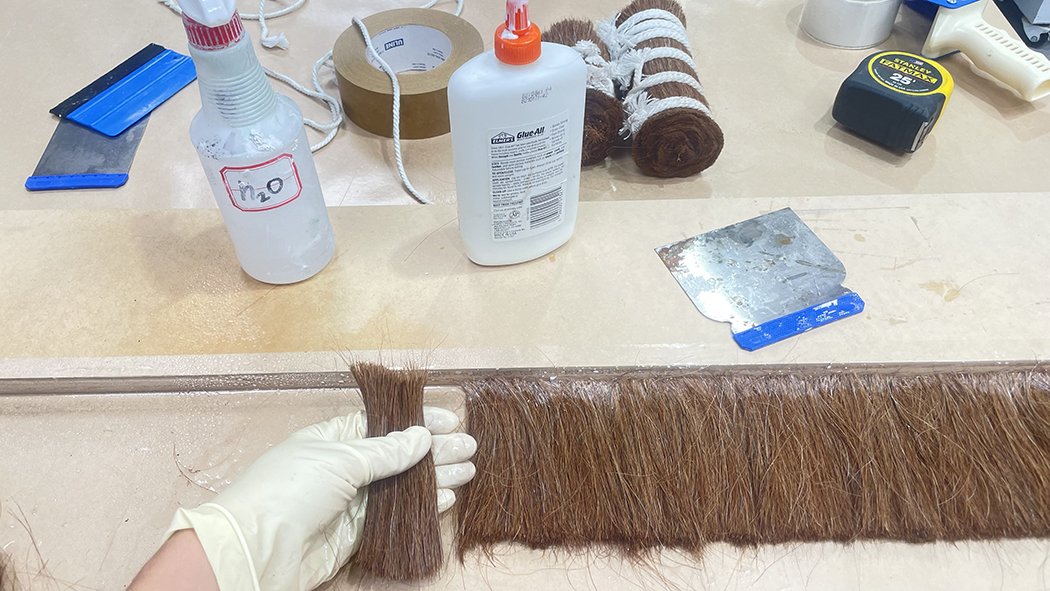
Chelsea: Yes. The horsehair. It arrived in what’s called a “hank”, a bundled cluster of loose hair. And to cut it, we used a hot knife. Which, yes, smells like burning hair. Not my favorite sensory moment.
But the trim we created from it? That’s probably the detail I’m most proud of. We’d never worked with horsehair before, so there was no roadmap. I actually researched horsehair trim and couldn’t find anything like what we were trying to do.
Meghan: Were there any other unexpected moments?
Chelsea: Oh, definitely. When I was dyeing the leather strap, I tested the dye on a small piece first and it looked perfect. Then I moved on to the big strap and realized - too late - that I had to lay the dye down all at once. It didn’t go smoothly.
So I sanded it back and redid sections, and in the process it developed this beautifully distressed finish. It ended up looking cooler than the original plan. A happy accident.
Meghan: So after all that planning and experimentation, what was the most satisfying part?
Chelsea: Finally putting it all together. We did so much thinking and testing beforehand that when it came time to assemble the final piece, it actually went really smoothly. That moment, when all the parts click into place, is the best.
Meghan: Final question. If this artwork had a soundtrack, what would it be?
Chelsea: Honestly, it actually brought me back into my childhood, the theme song to Bonanza. My dad used to play it, “da, da, da, da, da, da.” It just feels right - and special to me. But at the same time, I see Minnie in this artwork - perseverance, strength and little bit of luck.
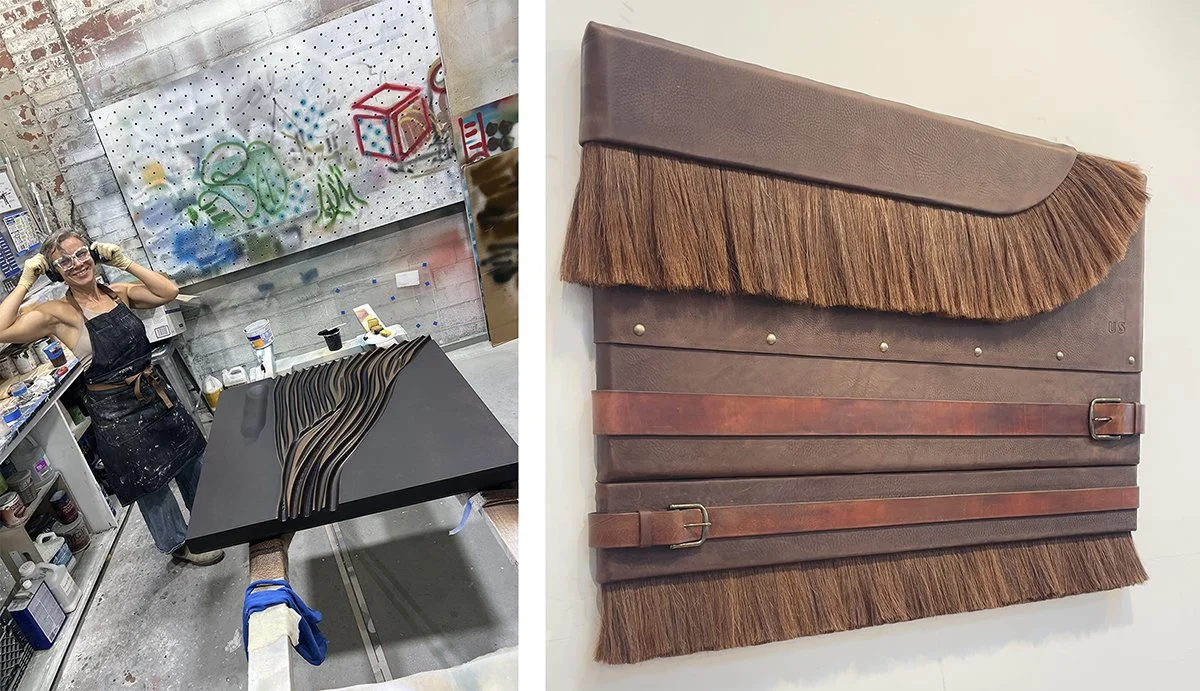
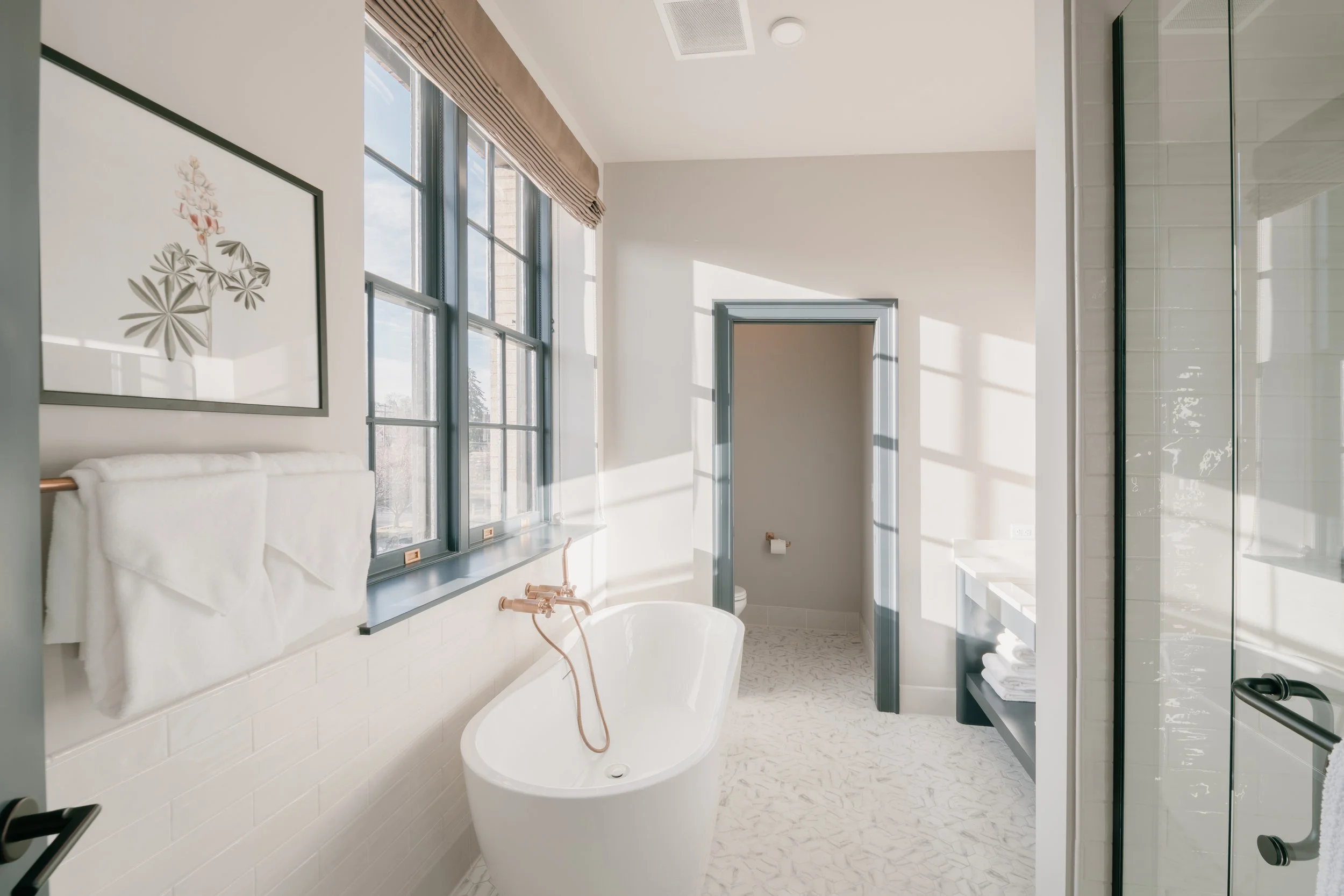
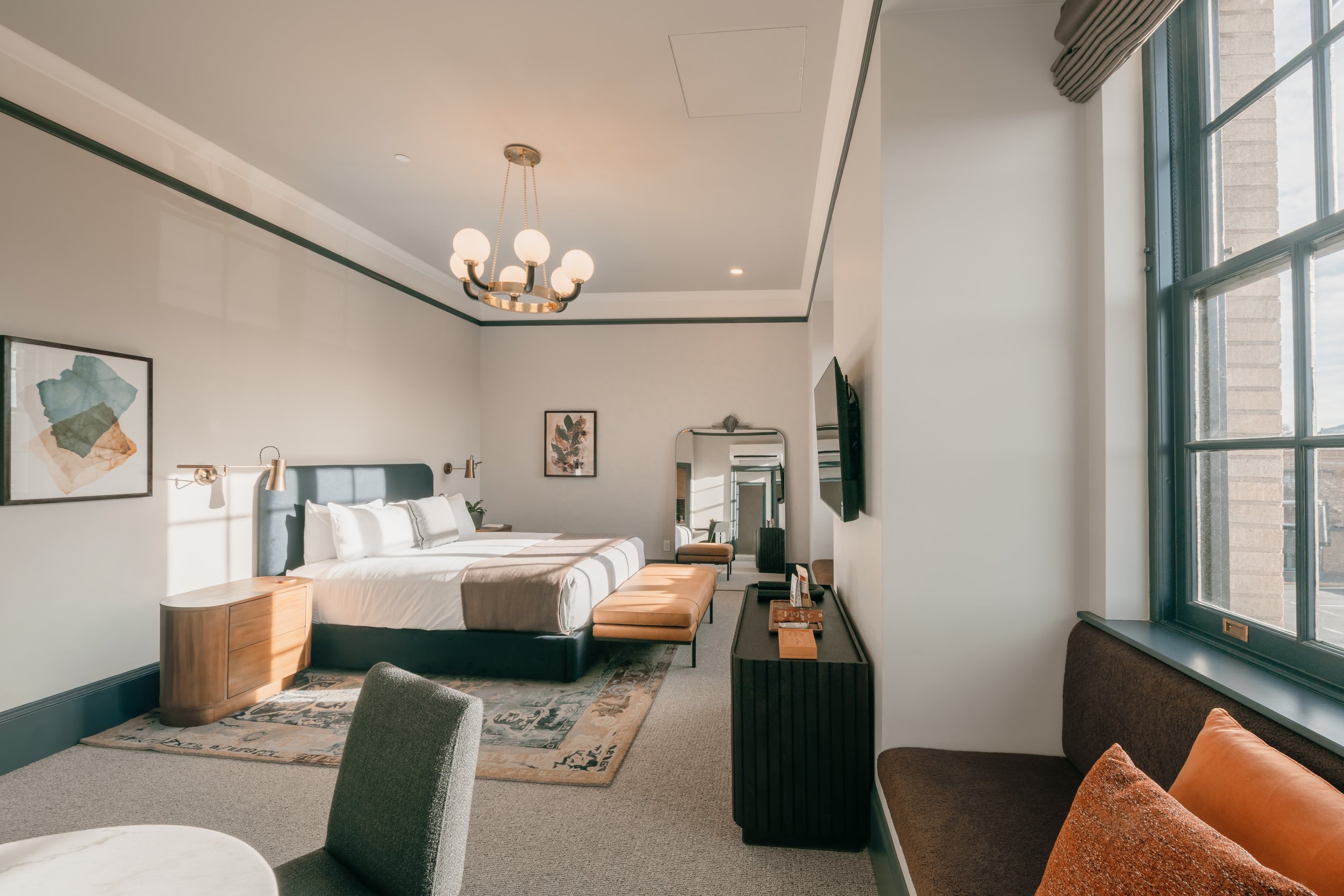
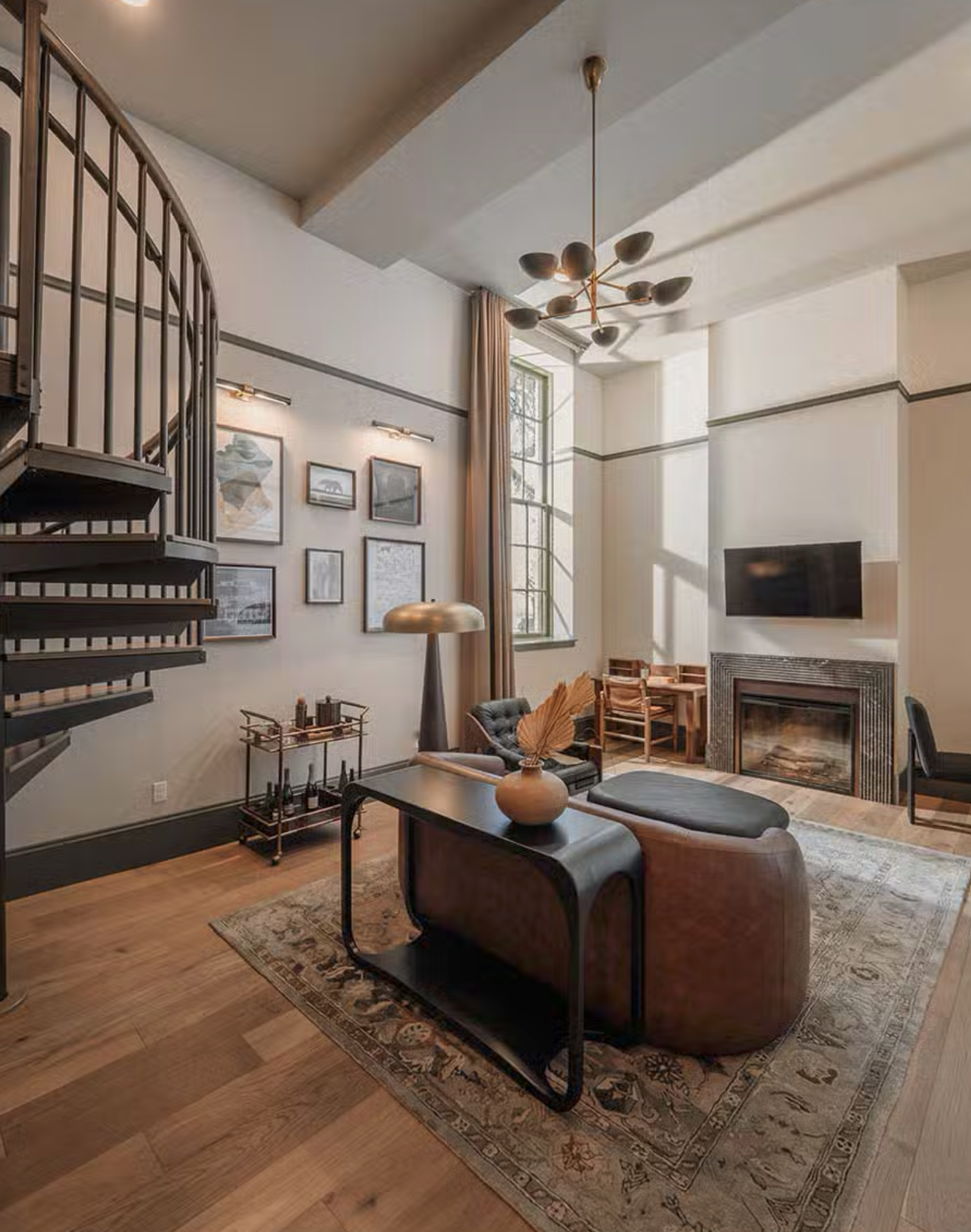
Local Language curated and created artwork throughout the Guest Rooms and Public Areas at The Westman Hotel