The Other Half of the Creative Work
Turning the Golden Gate into a freestanding sculpture and creative brand moment {on budget}
Most of our projects start with a story. We dig into a place, its history and community, and build the art collection from that Place DNA. It’s this creative work that art consulting firms thrive on, us included. However, monumental works don’t always require just this skillset - they require a different creative expertise - problem solving at scale.
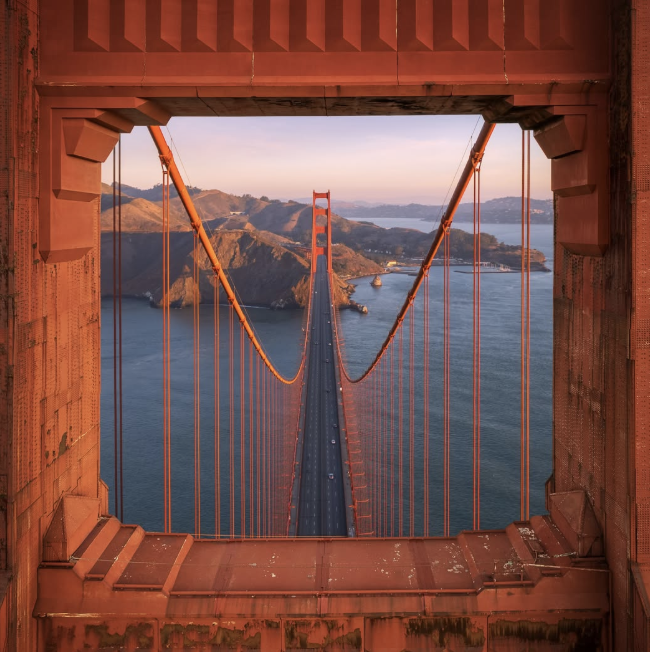
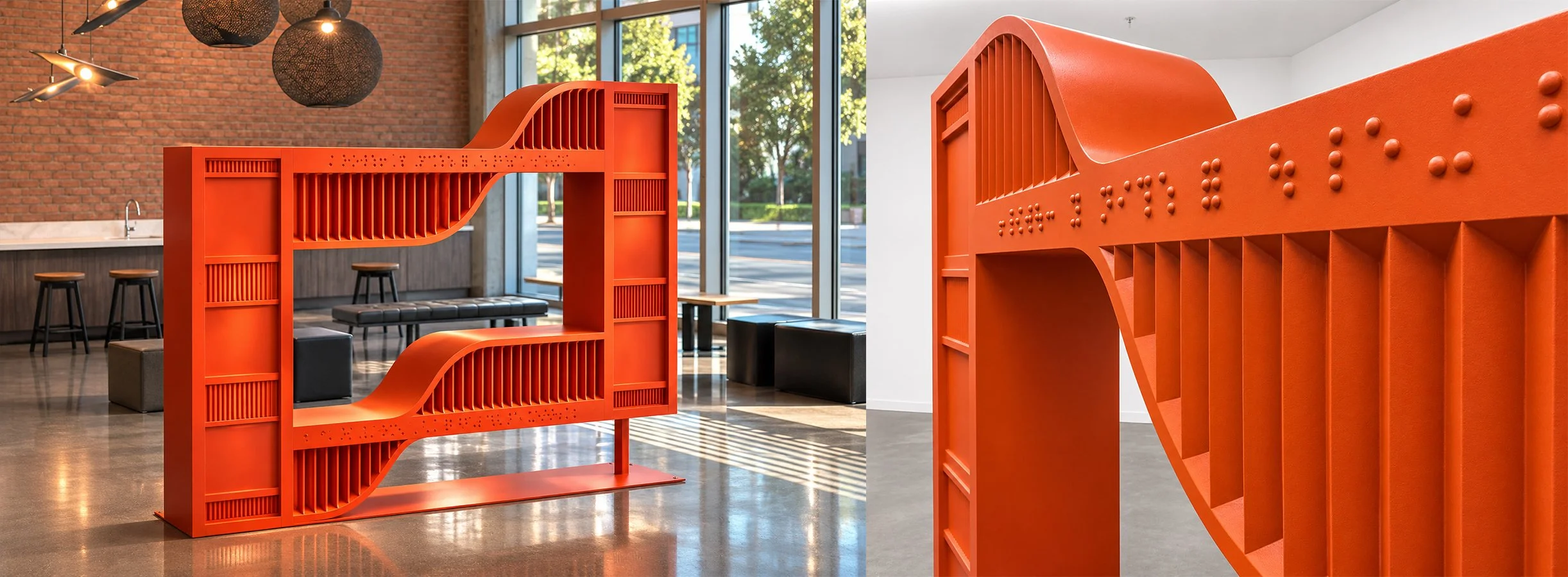
Brex, a San Francisco-headquartered finance company, came to us with a clear concept from its design team: the Brex logo, rendered in the color and detailing of the Golden Gate Bridge, as a freestanding sculpture for their office. Even the rivets carry a message. They’re working Braille, set within reach, spelling out the company’s ethos and a nod to its founding.
Solving for budget
Budget and timeline are constraints every client brings, and they shape the work as much as any design brief. For Brex, Jordan Bunnell, CEO, put the core challenge simply: "What we were ultimately solving for was how to deliver at scale while maintaining the right price point.”.
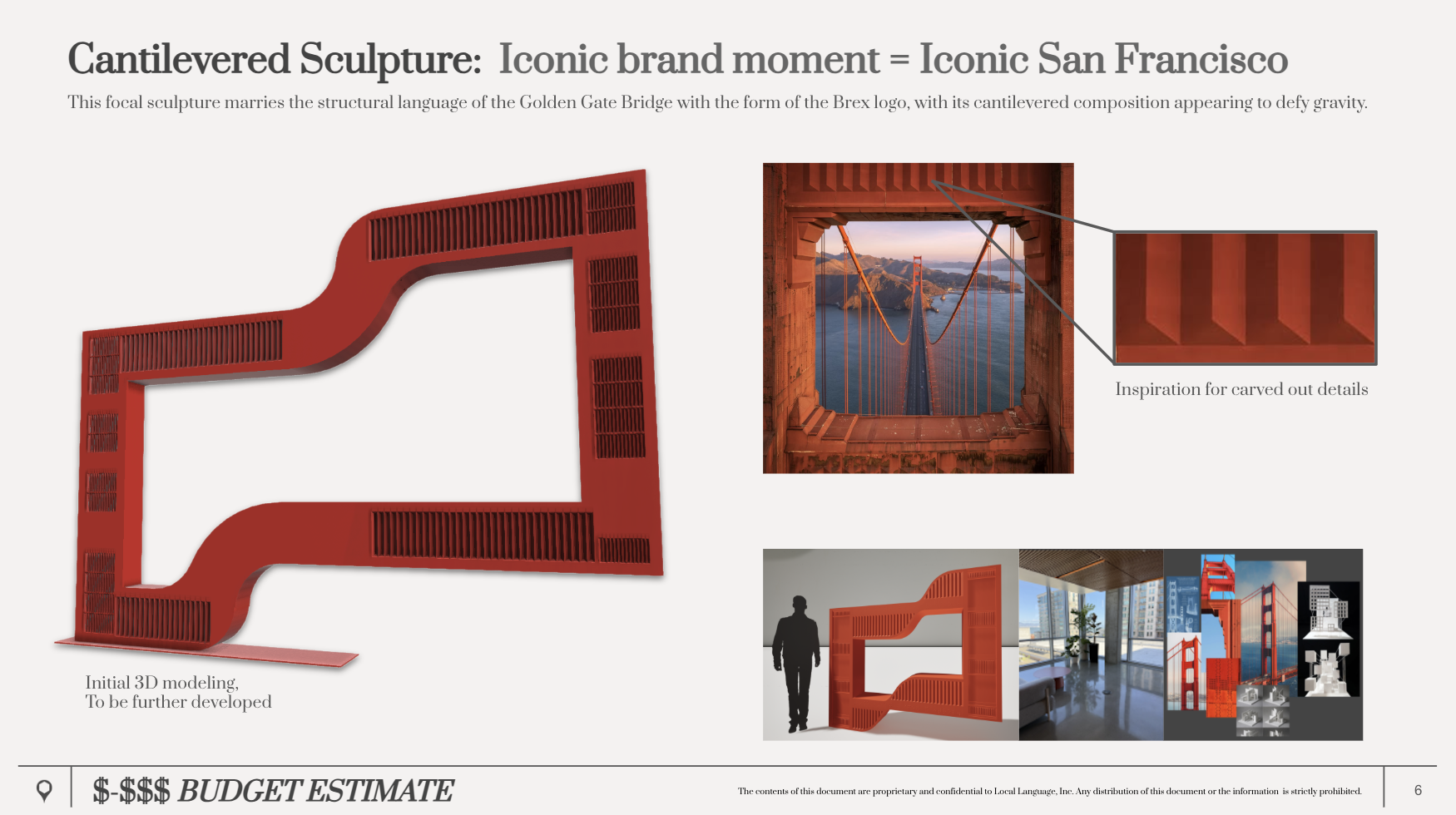
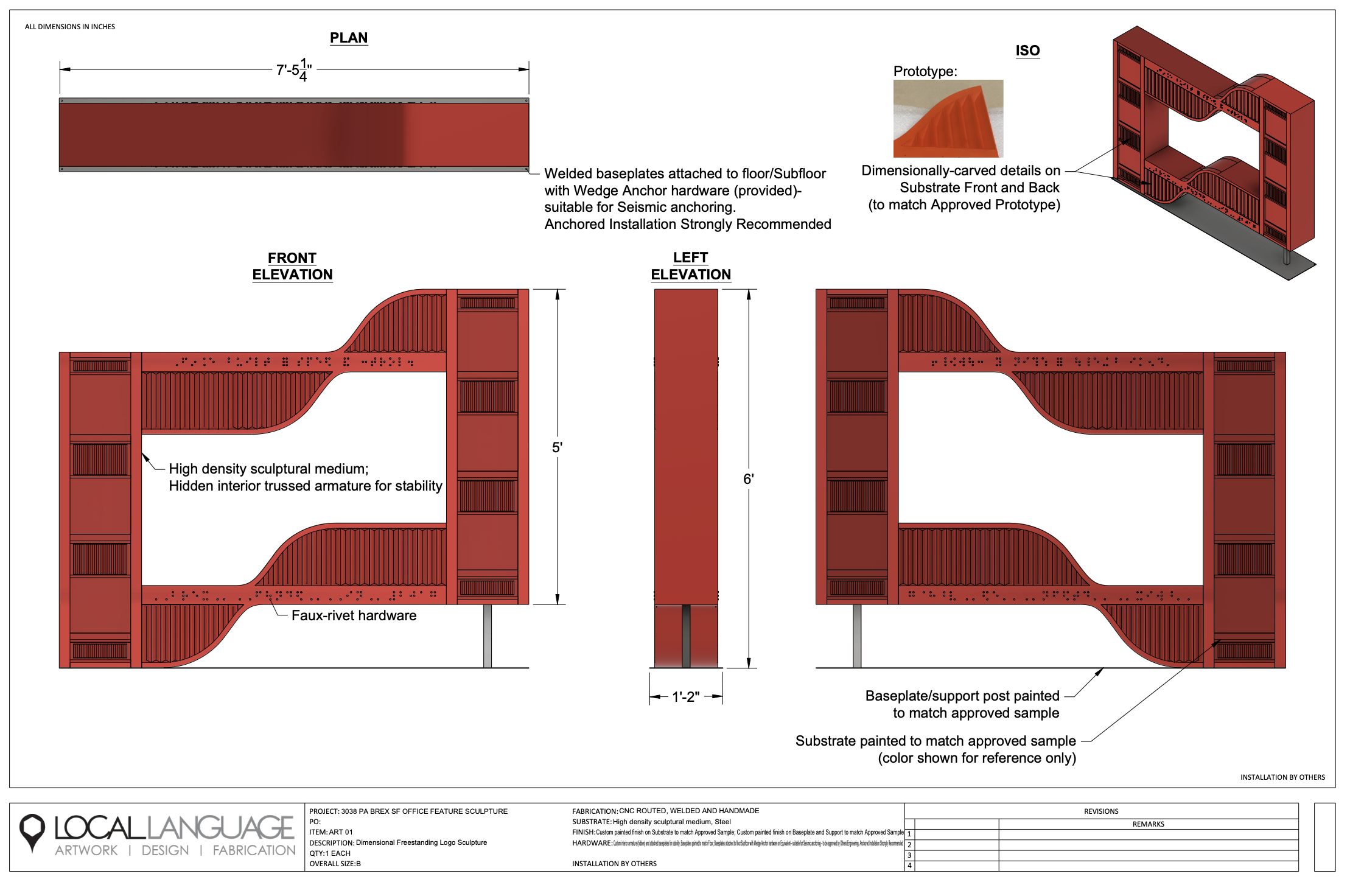
The concept called for a fully cantilevered form, with one end floating free. Building it the obvious way meant running a heavy welded steel armature through the piece, which the budget could not carry. Instead, our team designed a minimal sculptural base and a support post at the far end, with steel only at the core. The sculpture visually reads as cantilevered, stays structurally sound, and keeps the client's design intent intact.
creativity in execution
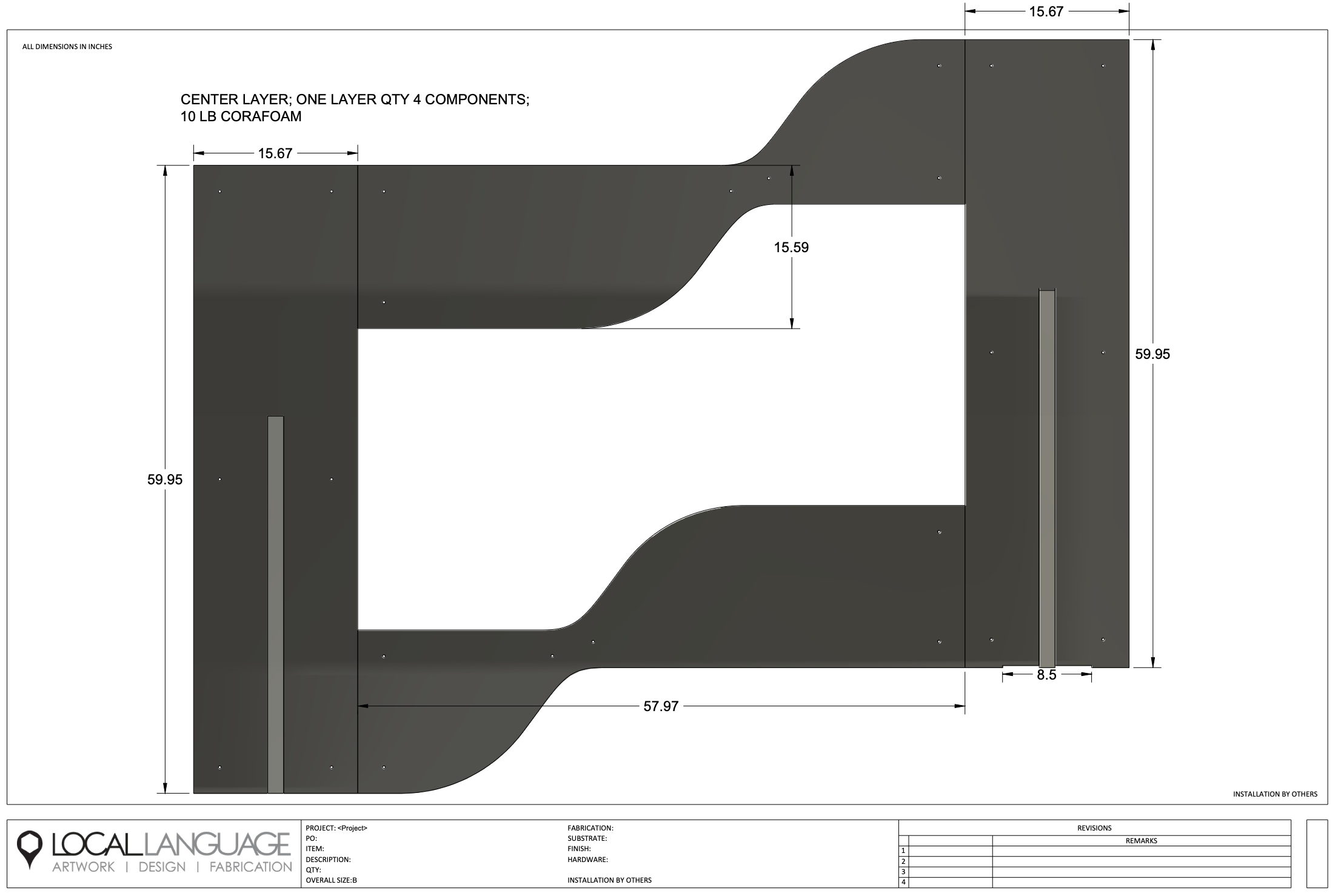
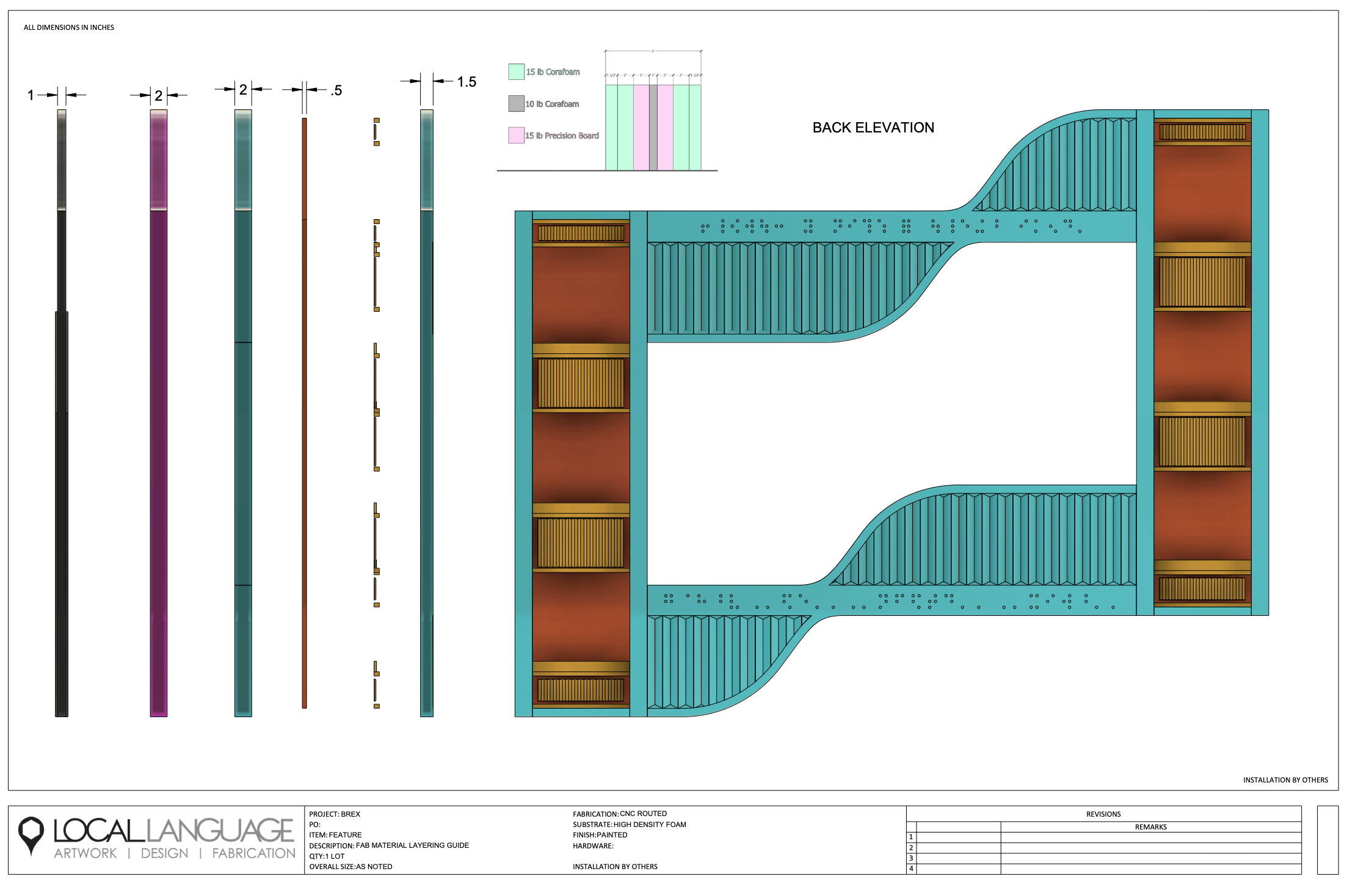
The material plan followed the same logic. The sculpture is built from high-density urethane (HDU) board, a durable closed-cell composite, layered by density:
The core uses the densest, strongest board, anchored to the steel armature so the piece won't twist or fail over time.
The exterior face uses a high-density board that resists damage in a busy public lobby.
Hidden interior layers use lighter, less expensive board, since no one will ever see or touch them.
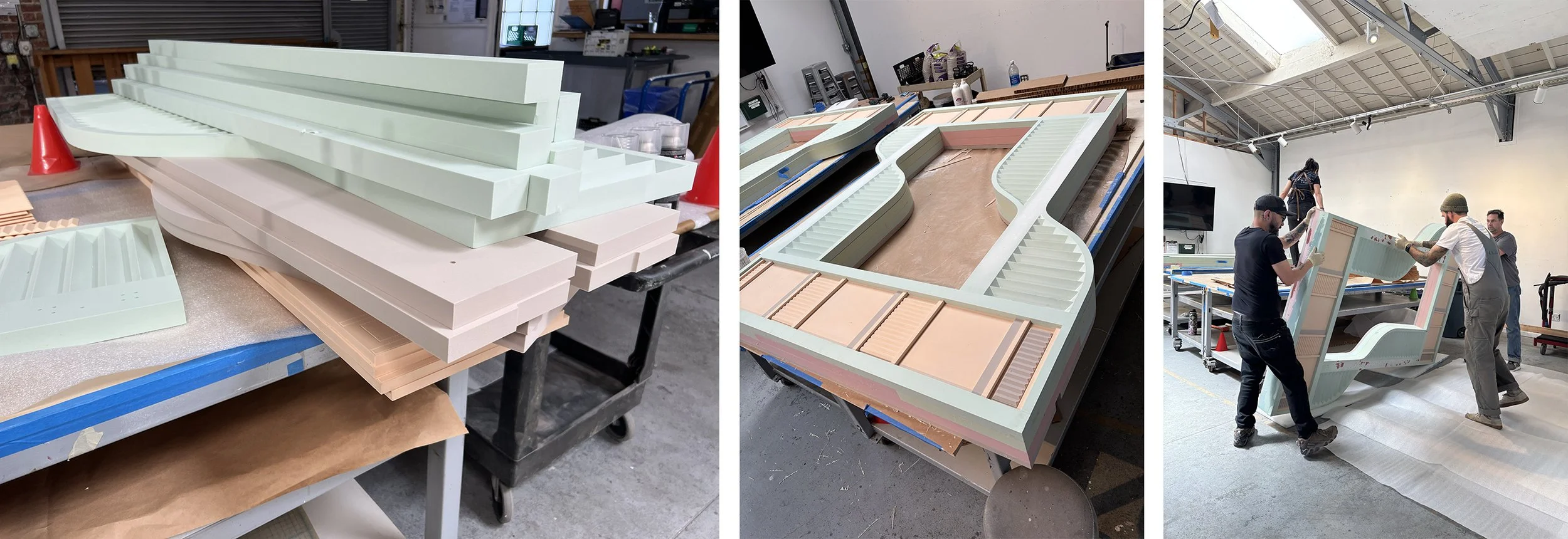
"You can make this a number of different ways, all of which I would argue are more expensive," Bauer says. "To meet their budget, we had to get creative. Our creativity here wasn't in the concept. It was in the execution, material selection and fabrication." Carving the whole piece from standard dense foam would have been faster, he notes, but it would have cost about twice as much.
Protecting the design
Value engineering often means simplifying a design until it fits the tools. We went the other way. The bridge's ridges, the tall vertical strips on each wing and the Braille “rivets” were fabricated as separate components, then set onto the base surface along precise scribe lines.
"Rather than changing the design to accommodate the limitations of the tool, we made these components to stay true to the bridge and to their concept," Bauer says. The Braille dots are real metal snap rivets, chosen over nylon for a cleaner finish.
Planning for installation from day one
How a large scale artwork gets into a building is a design question, and it needs an answer before fabrication starts. The Brex sculpture was originally headed to an upper floor, so it had to fit in the elevator. Our team worked out how to build it so it could tilt onto its side for the ride up, which let us make it larger and still get it there safely.
However, inevitably plans change. “The client was excited by the final submittal photos of our work in process - they wanted to move the piece to a more visible public area, the entry lobby - visible from outside” said Holly Wolff, Senior Art Consultant.
The elevator plan wasn’t needed in the end, but it was the right work to do: size, weight, access and structure all have to be solved up front. The new location brought its own challenge. The lobby floor is a concrete slab poured over rebar and building systems, including plumbing, so a structural engineer x-rayed it before we drilled. “They wanted us to miss anything embedded in the slab,” John says. “We used that information to place the hardware in our base plate and to position the sculpture in its final siting.” Our team installed the piece and handled final touch-ups.
The other half of the creative work
The story behind a piece gets the attention, and it should. But a concept only comes to fruition when someone works out how to make it within the budget, on time, and gets it through the front door. That part is creative work too, and we feel like it is sometimes the most challenging and gratifying part of the job.
"This is how we take the poetry of a concept and turn it into the prose of a physical object.”
-John Bauer, Fabrication Engineer. (our team knows John for his fabrication expertise and dry wit, but occasionally he is also a poet)