
Kate Florence Art
Hot Stuff:
Folk Art & Its Tangibility in the Digital Age
Our clients are increasingly drawn to the handmade, the imperfect, and what is often described as naïve art, even within some of the most refined hospitality spaces. While this appetite is especially evident in hotels seeking warmth and authenticity, it extends far beyond the hospitality industry. Across social media, a new generation of artists is embracing bold color, flattened perspectives, and playful forms that recall the visual language of folk and traditional art.
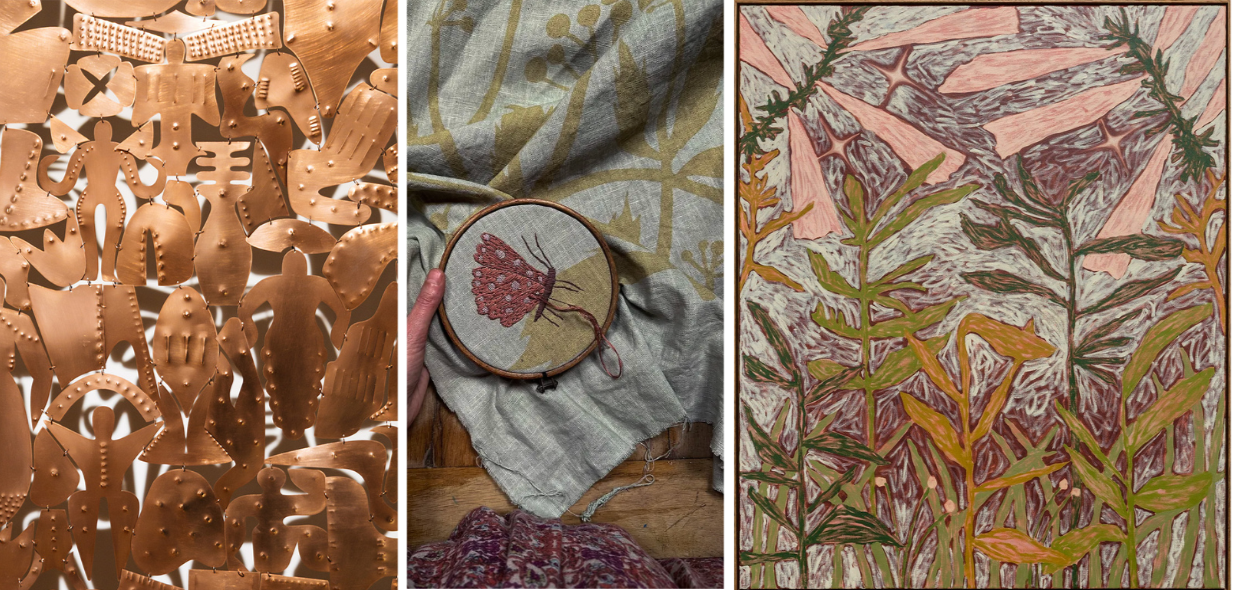
Contemporary Artists Shown (from left to right) :Anastasia Dzhan, Wool + Nature, Ruby Bovill
To understand why this aesthetic resonates so strongly today, it’s worth first understanding what folk art actually is...
Folk art is a broad term for creative traditions rooted in the communities, cultures, and everyday lives of the people who make them. It can include textiles, ceramics, painting, carving, weaving, decorative arts, and other forms of making passed down through generations or developed outside conventional art institutions. While some folk art is created by self-taught artists, the term also encompasses deeply established cultural traditions with their own histories, techniques, and visual languages.
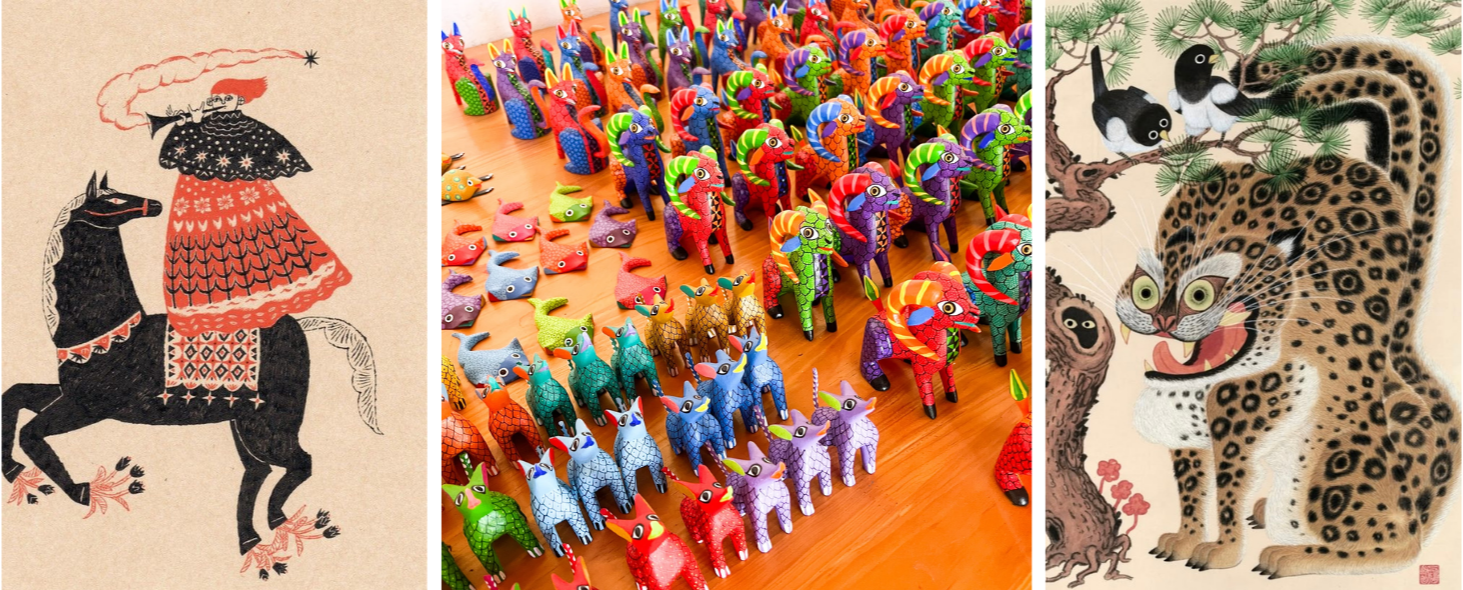
Traditional Folk art examples ( from left to right ): Japanese artist Sanae Sugimoto, Alebrijes (Mexican folk art sculptures that depict surreal creatures), and an example of Minhwa or Korea’s folk painting.
Today, that relationship between craft and place feels especially relevant.
At Local Language, we believe artwork should act as a silent ambassador, communicating a hotel's story without relying on words. Folk art naturally fulfills that role. Whether through handcrafted textiles, painted narratives, or regional motifs, it allows a property to celebrate its local heritage while creating spaces that feel deeply human. Part of this work is also ensuring that traditional craft and Indigenous knowledge are preserved, particularly in places where mass-produced reproductions increasingly replace local makers. Moreover, this work addresses themes that remain uniquely pressing in the present day.
In an era when flawless images can be produced almost instantly, paintings that reveal the artist's hand carry a different kind of value. Brushstrokes, uneven edges, stitched seams, carved surfaces, and imperfect forms remind us that someone spent time making them. They hold evidence of labor, intuition, and lived experience that cannot be accelerated or automated.
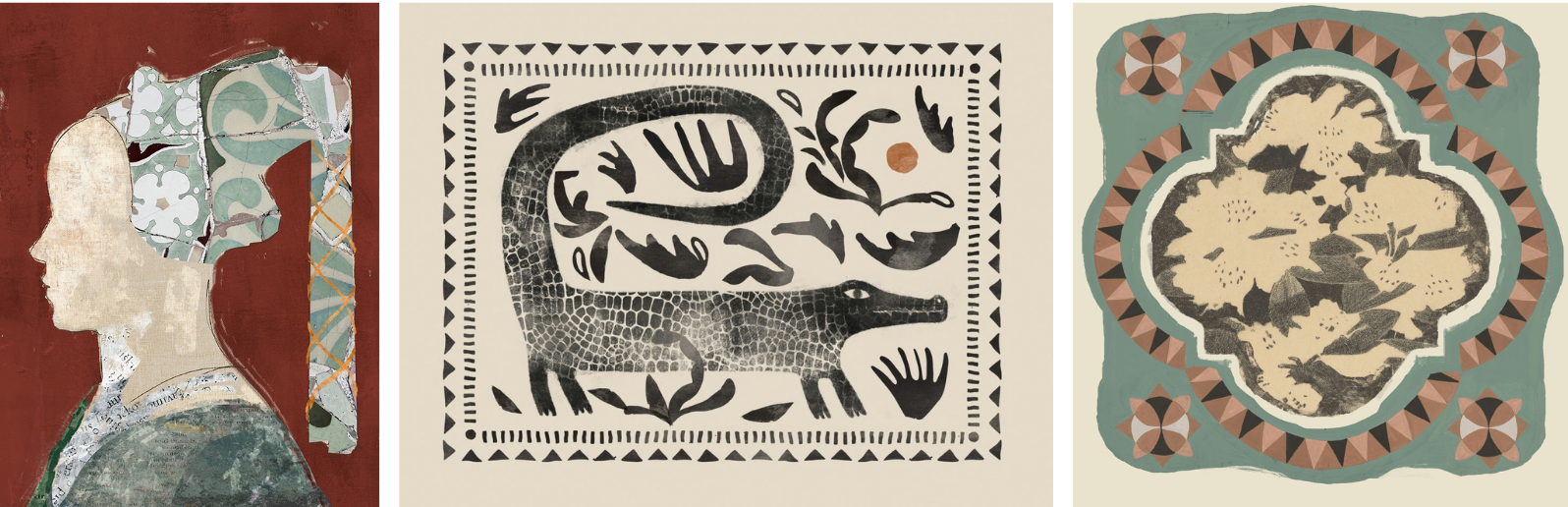
Some examples of folk art from our own art team, spanning projects in San Antonio, TX to Belize.
For much of history, folk art occupied the margins of the art world, often dismissed as naïve or less sophisticated than academically trained painting. Today, that perception has shifted dramatically. The physical act of making has itself become a form of rarity. As digital technologies continue to compress the time it takes to create images, the patience, friction, and materiality embedded within handcrafted work become increasingly precious. Perhaps that is why folk art feels so contemporary. Rather than competing with technology, it offers something technology cannot replicate: tangible evidence of the human hand. In hospitality, where memorable experiences are built through texture, atmosphere, and a strong sense of place, authenticity has never been more valuable.

Featured illustration by Katie Lukes.
The rapid rise of generative AI has only sharpened this contrast. Some argue that these systems are trained on copyrighted material without artists' consent, raising important questions about authorship and ownership. At the same time, AI has made it possible to generate convincing images within seconds, changing how we think about creativity, production, and value. As a former graphic designer and illustrator, I find this shift particularly fascinating. If a computer can produce something that appears authentic, what makes human-made work different?
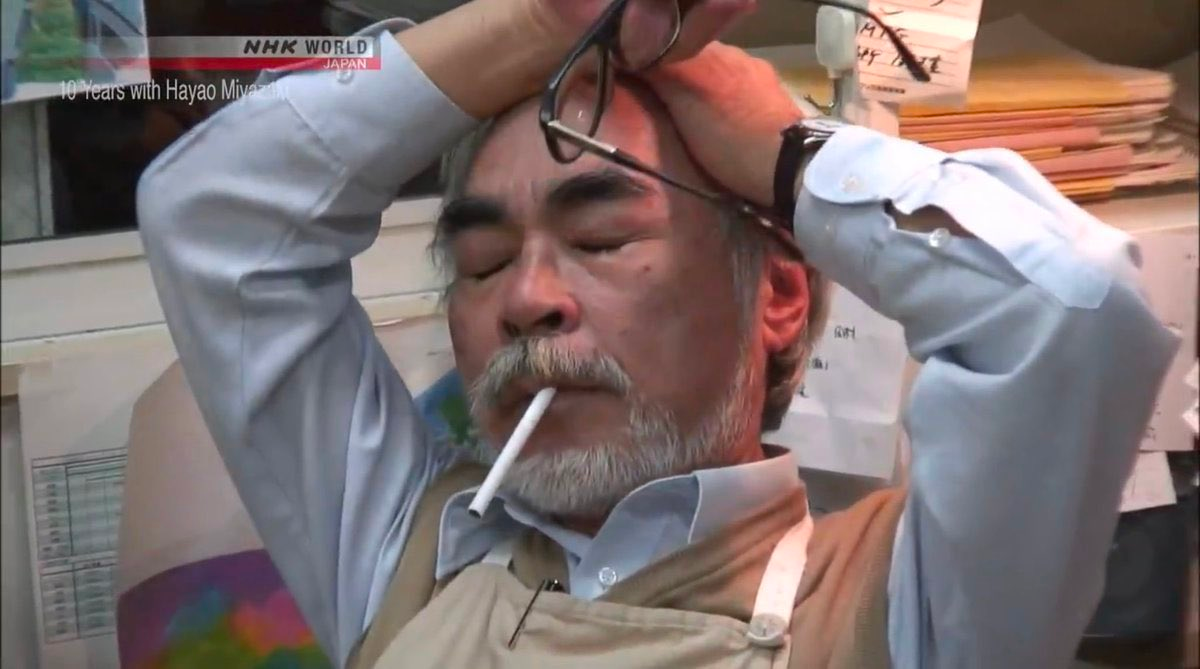
Hayao Miyazaki: Hayao Miyazaki is famous for a relentless, uncompromising work ethic that has driven him to personally supervise thousands of frames and work long hours well into his eighties.
There's a well-known clip of Hayao Miyazaki watching a demonstration of AI-generated animation and describing it as "an insult to life itself." While his reaction was intense, it echoes an older idea expressed by Leo Tolstoy, who argued that art is fundamentally an act of communication. It is the transmission of feeling: one person experiences something deeply and, through line, color, movement, sound, or form, enables someone else to experience it too.
That may be the most meaningful distinction. A folk textile, a carved bowl, or a narrative painting does more than depict emotion, it carries the trace of the person who felt it. A machine may imitate the visual appearance of that trace, but the history embedded within the object remains uniquely human.
This is precisely why handcrafted work has become so powerful within hospitality, and luxury more broadly. Luxury has always been tied to scarcity, craftsmanship, and time, qualities that cannot simply be manufactured on demand. Guests may not consciously analyze why a space feels memorable, but they instinctively recognize when it has been shaped with intention. A hand-loomed textile, a locally carved headboard, or a mural painted by someone who knows the landscape it depicts tells visitors they are somewhere specific, not just anywhere.
In an age increasingly defined by digital abundance, folk art offers something quietly radical.
It reminds us that the most meaningful objects are often those that reveal the unmistakable presence of another human being.
- Julia Randolph-Flagg, Associate Curator