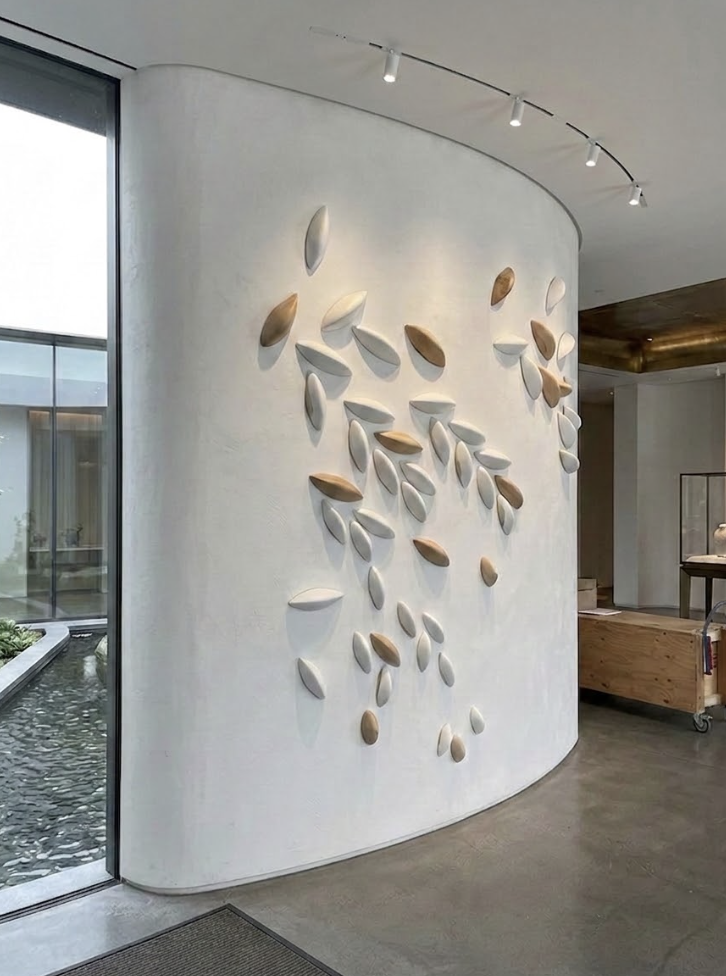
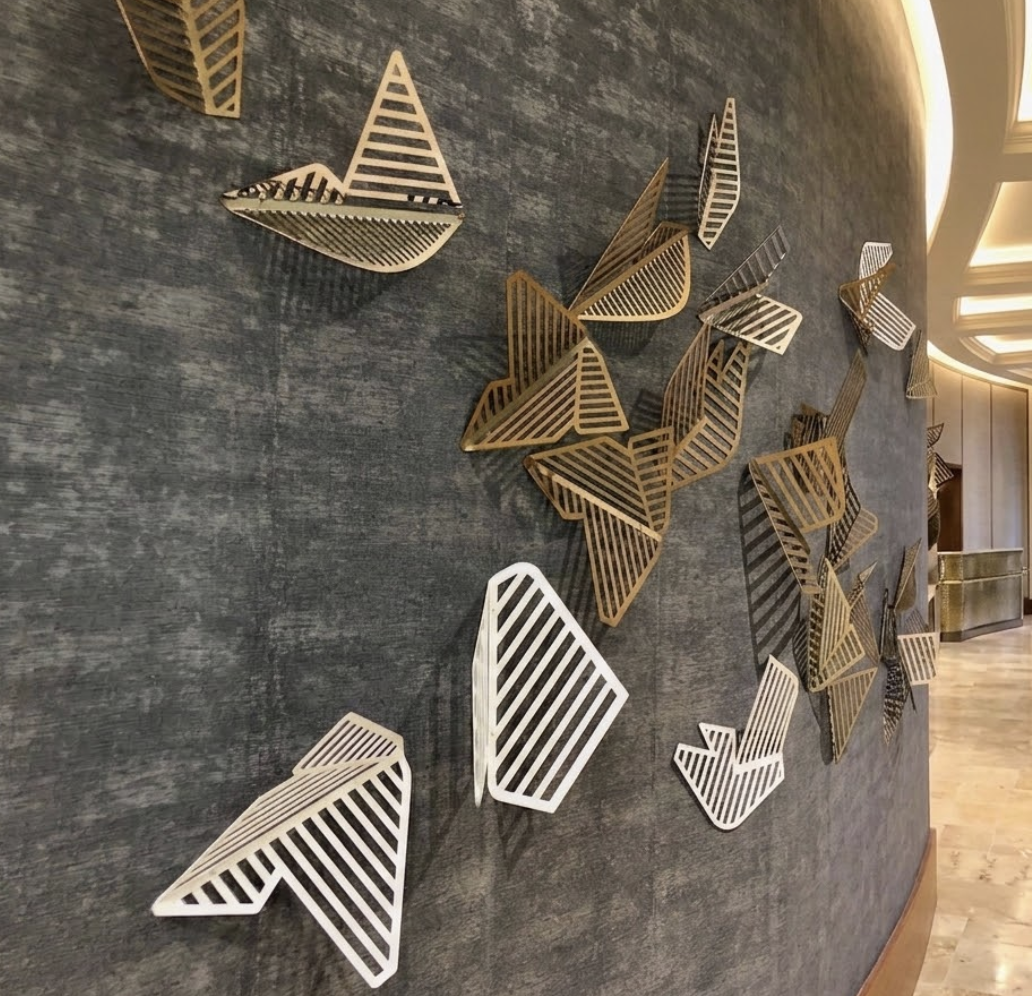
THe art CONSULTING edit: CURVED WALLS
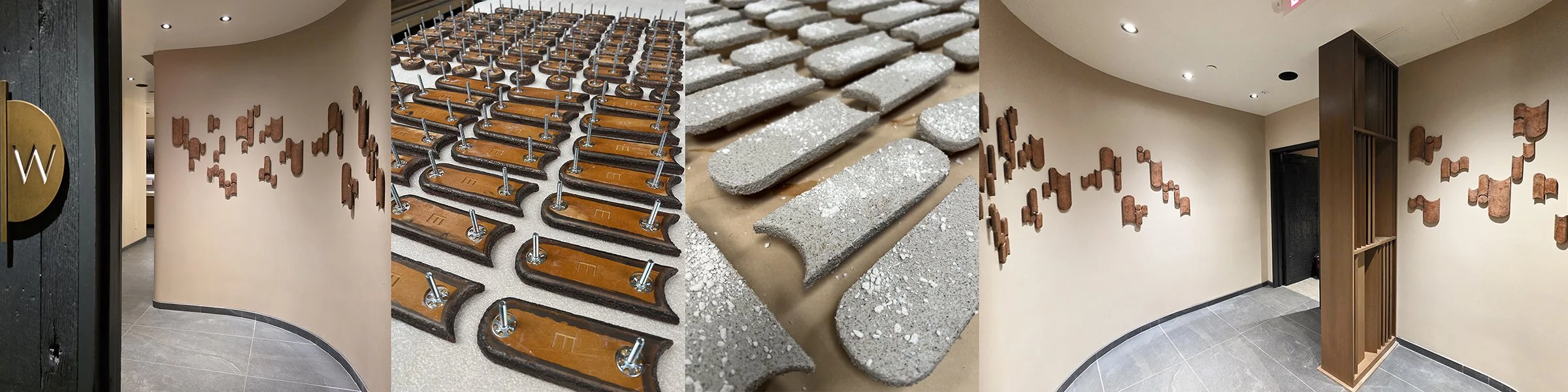
The award winning Miraval Spa Arizona by Harken Design
Curved walls are a common design challenge, and one of the most underserved. Too often, the instinct is to leave them blank or reach for a wallcovering. But wallcoverings and even murals have been overused in hospitality spaces in recent years, and guests notice. What was once a statement has become expected.
Meanwhile, owners and guests consistently rank dimensional and sculptural work as their most requested art experience. The curved wall is actually a prime opportunity to deliver exactly that.
WHY FRAMED ART DOESN’T WORK
The instinct to hang a series of framed pieces on a curved wall is understandable, but it rarely lands in a compelling way. Frames are designed for flat planes. On a curve, they cant or tilt slightly away from the wall, sight lines shift awkwardly, and the eye reads the geometry as a mistake rather than a choice. The architecture fights the art.
The better solution is an installation - an array of objects or components that moves with the curve instead of against it.
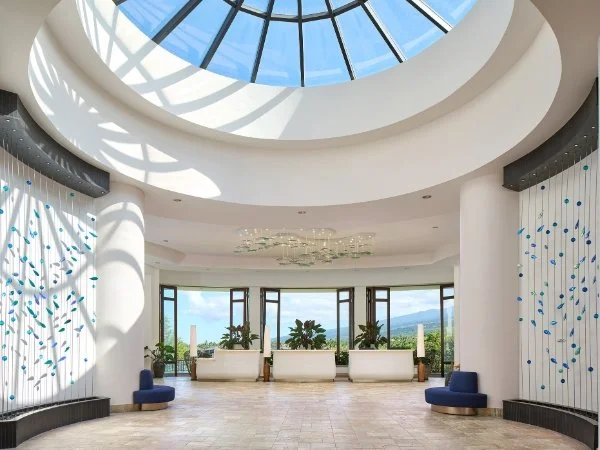
Kona Outrigger Resort by Looney & Associates; Artist Commission by Jonathan Swanz
WHAT AN ARRAY CAN DO
An array is a composition of individual elements arranged across a surface. The power is in the repetition and variation - individual pieces become part of a larger whole, and the curve becomes an asset, giving the installation movement, depth, and a sense of wrapping the viewer in the experience.
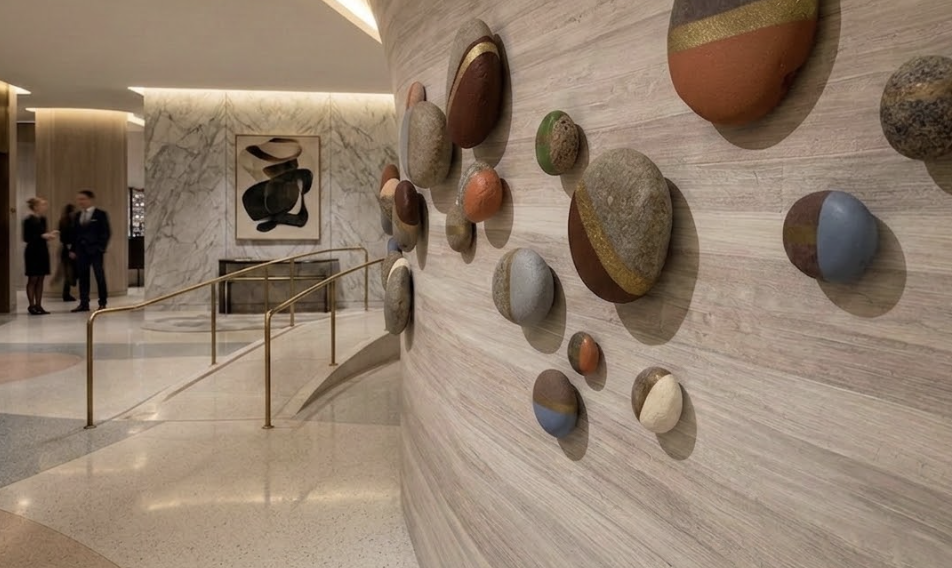
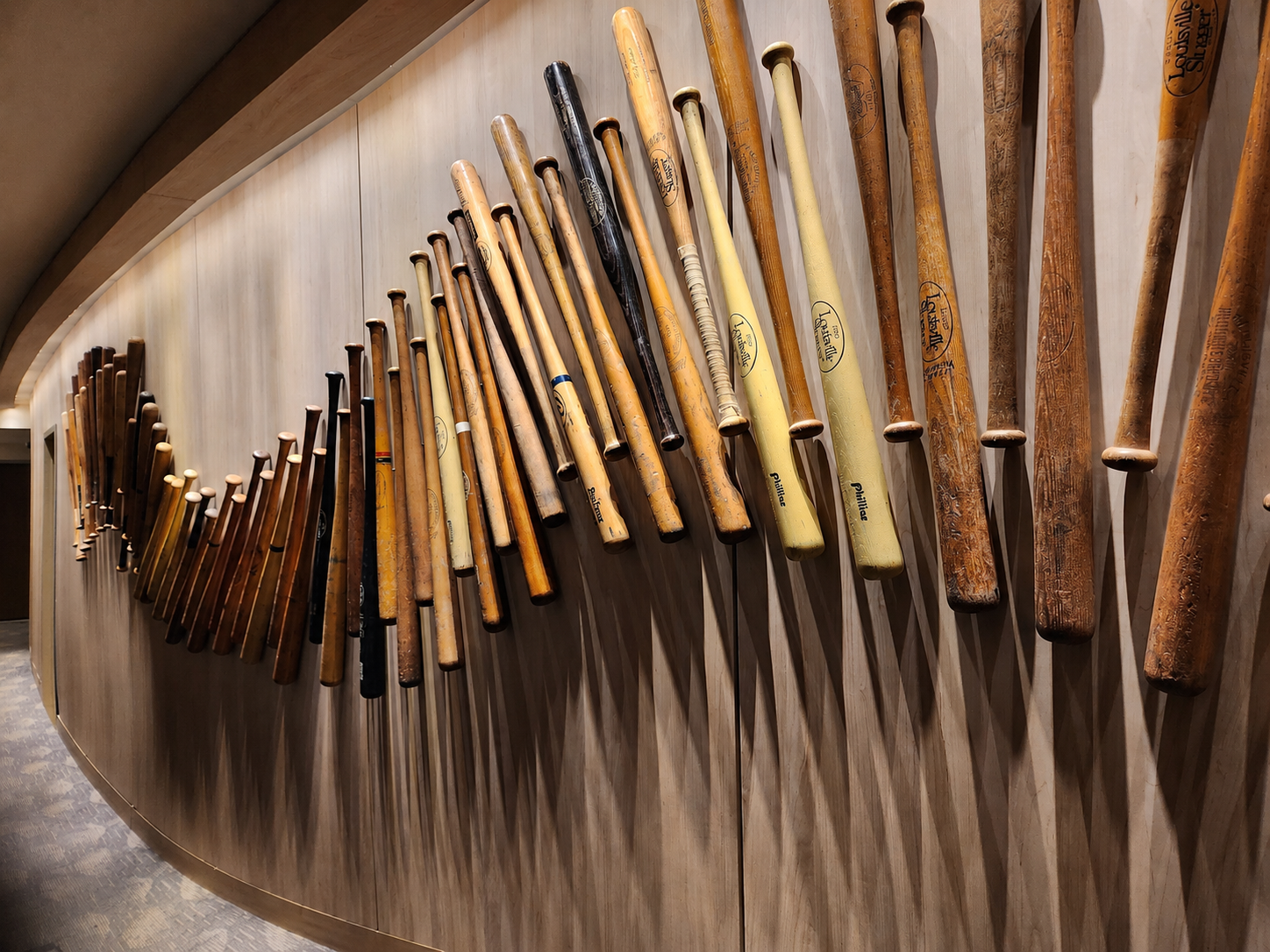
Arrays take many forms. Vintage or found objects can create rhythm and narrative - a collection of vintage baseball bats creates an undulating pattern amplifying motion and energy. In more intimate environments, small textural moments work beautifully: hand-textured shapes across in a curved hallway at the Miraval Spa Tucson bring materiality and depth to the space. Either way, the result is an immersive moment rather than a decorated wall.
Budget Considerations
Arrays work across a wide range of budgets, which makes them a practical tool at every project tier.
At the upper end, a large-scale focal installation on a curved wall can create a genuine wow moment. The curved lobby wall at the InterContinental Bellevue demonstrates how scale and sculptural ambition can anchor an entire space, establishing the property's design identity from the moment guests arrive with a unique artist commission.
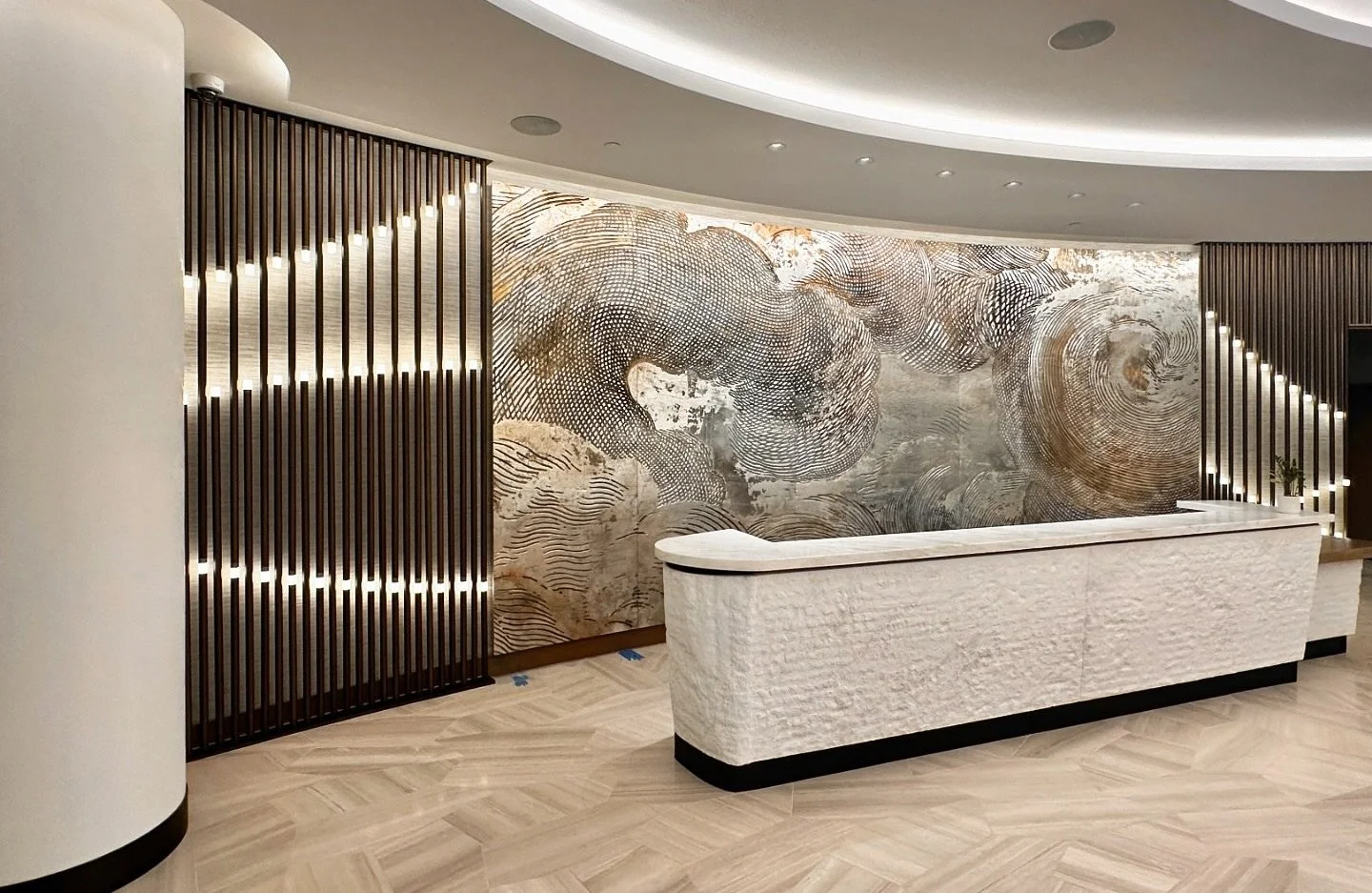
The InterContinental Bellevue Seattle by Hirsch Bedner Associates
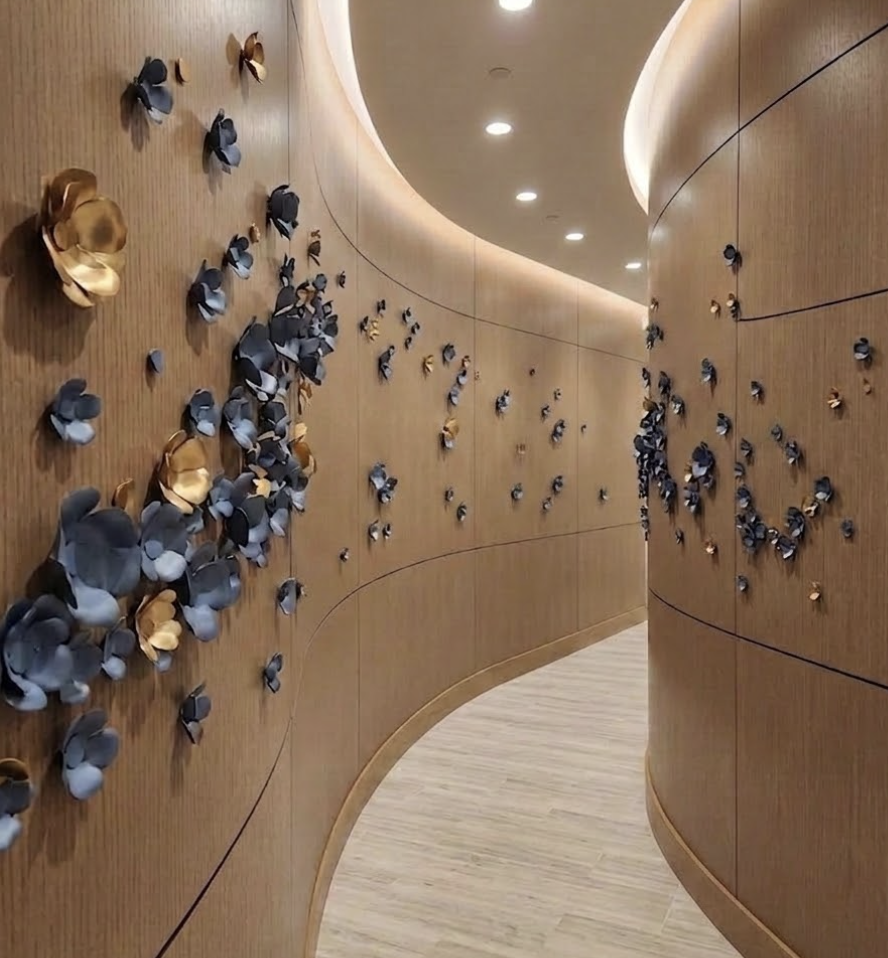
But an array doesn't require a flagship budget. From abstract textural forms to recognizable elements like a metal flower installation rooted in local landscape or brand story, a well-curated array can deliver the same immersive quality at a fraction of the cost. The key is in the curation: consistent material language, thoughtful spacing, and a composition that reads as intentional rather than just additive.
The Takeaway
When you encounter a curved wall, resist the default. Ask what the space needs - movement, texture, narrative, scale - and we like to work backwards from there. The architecture is already doing something interesting. The art should meet it there.